Pharmacopoeia
Introduction:
Pharmacopoeia is an essential reference document in the field of pharmacy and medicine. It serves as an official collection of quality standards for drugs, chemicals, and pharmaceutical substances. Pharmacists, researchers, manufacturers, and regulatory authorities rely on pharmacopoeias to ensure that medicines are safe, pure, effective, and of standard quality.
The term Pharmacopoeia is derived from the Greek words “Pharmakon” meaning drug and “Poiein” meaning to make, which together signify “drug-making”.
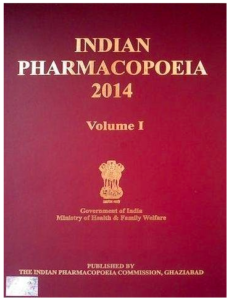
Definition of Pharmacopoeia:
A Pharmacopoeia is an official publication that lays down the standards for drugs, including their identity, purity, strength, tests, methods of preparation, and dosage forms. It is recognized by the government and serves as a legal and scientific guide for pharmaceutical manufacturing and quality control.
Objectives of Pharmacopoeia:
- To ensure the identity, purity, and strength of drugs.
- To provide standard methods for testing and preparation of medicines.
- To maintain uniform quality standards of pharmaceutical products.
- To protect the public from adulterated and substandard drugs.
- To guide pharmaceutical industries, researchers, and pharmacists in quality assurance.
Types of Pharmacopoeias:
Pharmacopoeias are broadly classified into two main categories:
1. National Pharmacopoeias:
These pharmacopoeias are prepared and published by individual countries for use within their own territories.
- Indian Pharmacopoeia (IP)
- British Pharmacopoeia (BP)
- United States Pharmacopoeia (USP)
- Japanese Pharmacopoeia (JP)
2. International Pharmacopoeia:
The International Pharmacopoeia is published by the World Health Organization (WHO). It provides international standards, especially useful for countries that do not have their own national pharmacopoeia.
History and Development of Pharmacopoeia in India:
The first Indian Pharmacopoeia (IP) was published in 1955 under the supervision of the Indian Pharmacopoeia Commission (IPC). Its primary objective was to establish a uniform drug standard across the country.
Since its first publication, the Indian Pharmacopoeia has undergone several revisions to include new drugs, updated dosage forms, modern analytical methods, and global regulatory requirements. Regular updates ensure alignment with international pharmaceutical standards.
Major Official Pharmacopoeias in Use:
- Indian Pharmacopoeia (IP): Official standard book for drugs in India.
- British Pharmacopoeia (BP): Official reference in the United Kingdom.
- United States Pharmacopoeia (USP): Widely used in the United States and internationally.
- European Pharmacopoeia (EP): Harmonized standards for European countries.
- Japanese Pharmacopoeia (JP): Official pharmacopoeia of Japan.
Contents of a Pharmacopoeia:
A typical pharmacopoeia contains the following sections:
- Monographs of drugs: Names, sources, identification tests, purity standards, and assays.
- General notices: Legal and technical guidelines for interpretation.
- Appendices: Analytical methods, reagents, and reference solutions.
- Packaging and storage standards: Conditions to maintain drug stability.
- Dosage form specifications: Standards for tablets, capsules, injections, and other formulations.
Importance of Pharmacopoeia in Pharmacy:
- Ensures standardization and quality of medicines.
- Acts as a legal reference for drug regulatory authorities.
- Provides guidelines for Good Manufacturing Practices (GMP).
- Helps pharmacists verify the authenticity and potency of drugs.
- Supports research, development, and quality control in pharmaceutical industries.
Frequently Asked Questions (FAQs)
1. What is the purpose of a pharmacopoeia?
The main purpose of a pharmacopoeia is to ensure that medicines meet defined standards of identity, purity, strength, and quality for safe use.
2. Is pharmacopoeia legally binding?
Yes, pharmacopoeias are legally recognized documents. Compliance with pharmacopoeial standards is mandatory for drug manufacturers and regulators.
3. Who publishes the Indian Pharmacopoeia?
The Indian Pharmacopoeia is published by the Indian Pharmacopoeia Commission (IPC) under the Ministry of Health and Family Welfare, Government of India.
4. What is the difference between IP and USP?
IP is the official pharmacopoeia of India, while USP is the official pharmacopoeia of the United States. Both define drug standards, but their regulatory jurisdictions differ.
5. Why is pharmacopoeia important for pharmacy students?
Pharmacopoeia helps students understand drug standards, quality control tests, and regulatory requirements, making it a foundational subject in pharmacy education.