Drugs Acting on the Eye
Introduction:
Drugs acting on the eye are used to diagnose, treat, or prevent diseases of the eye and to modify ocular functions such as pupil size, accommodation, and intraocular pressure. These drugs are commonly used in ophthalmology for conditions like glaucoma, infections, inflammation, allergic reactions, and during eye examinations.
Most ophthalmic drugs are applied locally in the form of eye drops, ointments, or gels to produce a direct effect on the eye with minimal systemic side effects.
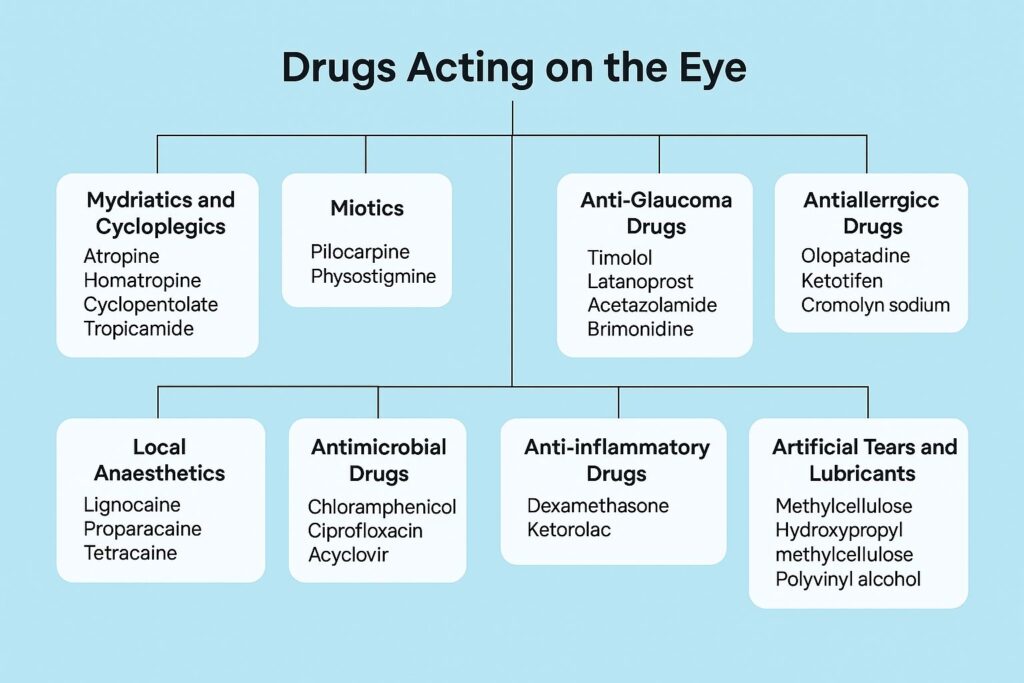
Classification of Drugs Acting on the Eye:
Drugs acting on the eye are broadly classified based on their pharmacological actions.
1. Mydriatics and Cycloplegics:
These drugs cause dilation of the pupil (mydriasis) and paralysis of accommodation (cycloplegia). They are mainly used during eye examination and in certain inflammatory conditions.
Mechanism of action: They block muscarinic receptors of the iris sphincter muscle, leading to pupil dilation.
Examples: Atropine, Homatropine, Cyclopentolate, Tropicamide
Uses:
- Fundus examination
- Refraction testing
- Treatment of uveitis and iritis
2. Miotics:
Miotics cause constriction of the pupil (miosis). They are mainly used in the treatment of glaucoma.
Mechanism of action: They stimulate muscarinic receptors, increasing aqueous humor outflow.
Examples: Pilocarpine, Physostigmine
Uses:
- Chronic open-angle glaucoma
- Acute angle-closure glaucoma
3. Anti-Glaucoma Drugs:
Glaucoma is a condition characterized by increased intraocular pressure (IOP), which can damage the optic nerve. Anti-glaucoma drugs reduce IOP either by decreasing aqueous humor production or increasing its outflow.
Classes and examples:
- Beta blockers: Timolol, Betaxolol
- Prostaglandin analogues: Latanoprost, Bimatoprost
- Carbonic anhydrase inhibitors: Acetazolamide, Dorzolamide
- Alpha agonists: Brimonidine
4. Local Anaesthetics:
These drugs produce loss of sensation in the eye and are used for minor surgical procedures and diagnostic purposes.
Examples: Lignocaine, Proparacaine, Tetracaine
Uses:
- Tonometer examination
- Removal of foreign bodies
- Minor eye surgeries
5. Antimicrobial Drugs:
Antimicrobial agents are used to treat bacterial, viral, and fungal infections of the eye.
Examples:
- Antibiotics: Chloramphenicol, Ciprofloxacin, Tobramycin
- Antivirals: Acyclovir
- Antifungals: Natamycin
Uses:
- Conjunctivitis
- Keratitis
- Blepharitis
6. Anti-Inflammatory Drugs:
These drugs reduce inflammation, redness, pain, and swelling of the eye.
Examples:
- Corticosteroids: Dexamethasone, Prednisolone
- NSAIDs: Ketorolac, Diclofenac
Uses:
- Allergic eye conditions
- Post-operative inflammation
- Uveitis
7. Antiallergic Drugs:
These drugs are used to treat allergic conditions of the eye by preventing the release or action of histamine.
Examples: Olopatadine, Ketotifen, Cromolyn sodium
Uses:
- Allergic conjunctivitis
- Seasonal eye allergies
8. Artificial Tears and Lubricants:
These preparations are used to relieve dryness and irritation of the eyes.
Examples: Methylcellulose, Hydroxypropyl methylcellulose, Polyvinyl alcohol
Uses:
- Dry eye syndrome
- Computer vision syndrome
- Contact lens irritation
Summary:
Drugs acting on the eye play a vital role in the diagnosis and treatment of various ocular disorders. Proper selection, correct dosage, and appropriate administration are essential to ensure effectiveness and avoid adverse effects. Knowledge of these drugs is important for pharmacy students and healthcare professionals involved in eye care.
Frequently Asked Questions (FAQs)
1. What are drugs acting on the eye?
They are medications used to diagnose, treat, or prevent eye diseases and to modify eye functions such as pupil size and intraocular pressure.
2. What is the difference between mydriatics and miotics?
Mydriatics dilate the pupil, while miotics constrict the pupil.
3. Which drugs are commonly used in glaucoma?
Beta blockers, prostaglandin analogues, carbonic anhydrase inhibitors, and miotics are commonly used in glaucoma.
4. Why are eye drugs mostly used locally?
Local application produces a direct effect on the eye and reduces systemic side effects.
5. What are artificial tears used for?
Artificial tears are used to relieve dryness, irritation, and discomfort of the eyes.