General Pharmacology
Introduction to General Pharmacology:
General Pharmacology is the branch of pharmacology that deals with the basic principles governing the action of drugs on the human body. It explains how drugs are administered, absorbed, distributed, metabolized, and excreted, and how they produce their therapeutic and adverse effects.
This subject forms the foundation for understanding all other branches of pharmacology. It helps pharmacy students understand why drugs act differently in different individuals and how rational and safe drug therapy can be achieved.
Definition of Pharmacology:
Pharmacology is the science that studies drugs, their sources, chemical properties, actions, mechanisms of action, therapeutic uses, and adverse effects on living organisms.
Scope of General Pharmacology:
General Pharmacology provides basic knowledge required for:
- Understanding drug action and drug behavior in the body
- Rational selection and use of medicines
- Prevention of drug-related problems and adverse effects
- Development and evaluation of new drugs
Sources of Drugs:
Drugs are obtained from various sources:
- Plant sources such as digitalis, morphine, and atropine
- Animal sources such as insulin and heparin
- Mineral sources such as iron and magnesium salts
- Synthetic and semi-synthetic sources such as paracetamol and amoxicillin
- Biotechnological sources such as vaccines and monoclonal antibodies
Routes of Drug Administration:
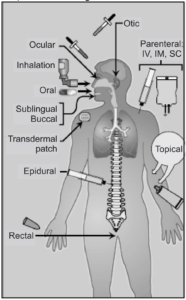
- Drugs can be administered through different routes depending on the desired effect and condition of the patient.
- Oral route is the most common and convenient route but may be affected by digestion and first-pass metabolism.
- Parenteral routes include intravenous, intramuscular, and subcutaneous administration, which provide rapid and predictable drug action.
- Other routes include inhalation, topical, transdermal, rectal, and sublingual routes.
Pharmacokinetics:
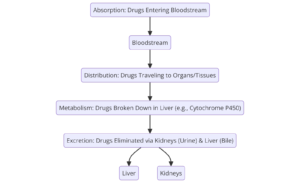
Pharmacokinetics deals with what the body does to the drug. It includes the study of absorption, distribution, metabolism, and excretion of drugs.
Absorption:
Absorption is the process by which a drug enters the bloodstream from the site of administration.
Distribution:
Distribution refers to the transport of drug from the bloodstream to tissues and organs.
Metabolism:
Metabolism is the chemical alteration of drugs in the body, mainly in the liver, to facilitate elimination.
Excretion:
Excretion is the removal of drugs from the body, primarily through kidneys, bile, lungs, sweat, and saliva.
Pharmacodynamics:
Pharmacodynamics deals with what the drug does to the body. It explains how drugs produce their effects and their mechanism of action.
Drugs act by interacting with receptors, enzymes, ion channels, or transport systems to produce therapeutic effects.
Drug Receptors:
Receptors are specific biological molecules that interact with drugs to produce a response. The intensity of drug action depends on receptor affinity and intrinsic activity.
Types of Drug Action:
Drugs may produce different types of actions:
- Stimulation of cellular activity
- Depression of cellular activity
- Irritation of tissues
- Replacement therapy
- Cytotoxic action
Adverse Drug Reactions:
Adverse drug reactions are unwanted and harmful effects produced by drugs at normal doses. These reactions may be mild or severe and sometimes life-threatening.
Drug Tolerance and Dependence:
- Tolerance occurs when repeated use of a drug reduces its effect, requiring higher doses.
- Dependence is a state where the body requires the drug for normal functioning, leading to withdrawal symptoms when stopped.
Drug Interactions:
Drug interactions occur when the effect of one drug is altered by the presence of another drug, food, or chemical substance. These interactions may enhance or reduce drug action.
Rational Use of Drugs:
Rational drug use means prescribing the right drug, in the right dose, for the right duration, and at the right cost, to achieve maximum therapeutic benefit with minimum risk.
Summary:
General Pharmacology provides the essential foundation for understanding how drugs work and how they should be used safely and effectively. A clear understanding of these basic principles is crucial for pharmacy students to ensure rational drug therapy and patient safety.
Frequently Asked Questions (FAQs)
1. What is General Pharmacology?
General Pharmacology deals with the basic principles of drug action, including pharmacokinetics and pharmacodynamics.
2. Why is General Pharmacology important?
It helps understand how drugs act in the body and ensures safe and rational use of medicines.
3. What is the difference between pharmacokinetics and pharmacodynamics?
Pharmacokinetics explains what the body does to the drug, while pharmacodynamics explains what the drug does to the body.
4. What are adverse drug reactions?
They are unwanted and harmful effects produced by drugs at normal therapeutic doses.
5. What is rational use of drugs?
It means using the right drug in the right dose and duration to achieve the best therapeutic outcome with minimal risk.