Introduction:
Pharmacognosy is one of the most important subjects in the first year of the Diploma in Pharmacy (D.Pharmacy) course. It deals with the study of crude drugs obtained from natural sources such as plants, animals, minerals, and microorganisms. This subject helps pharmacy students understand how natural substances are used as medicines and how they are identified, processed, and standardized.
The word Pharmacognosy is derived from two Greek words: Pharmakon meaning drug and Gnosis (or Gignosco) meaning knowledge. Thus, Pharmacognosy literally means knowledge of drugs.
Definition of Pharmacognosy:
Pharmacognosy is the branch of pharmacy that deals with the study of crude drugs of natural origin, including their sources, chemical constituents, therapeutic uses, and methods of identification. It provides scientific knowledge about natural medicines and their role in healthcare.
History of Pharmacognosy:
- The history of Pharmacognosy dates back to ancient civilizations where natural products were used for treating diseases.
- In Egypt around 1500 BC, the Papyrus Ebers mentioned more than 700 drugs and 800 formulations, including aloe, myrrh, and peppermint.
- In China between 3000 and 5000 BC, Emperor Shen Nung wrote Pen-T’sao, one of the earliest herbal records describing 365 medicinal plants such as opium, rhubarb, and ephedra.
- In India between 2000 and 600 BC, ancient texts like the Rigveda, Atharvaveda, Charaka Samhita, and Sushruta Samhita described many medicinal plants used in Ayurveda, including Rauwolfia serpentina, Brahmi, and Ashwagandha.
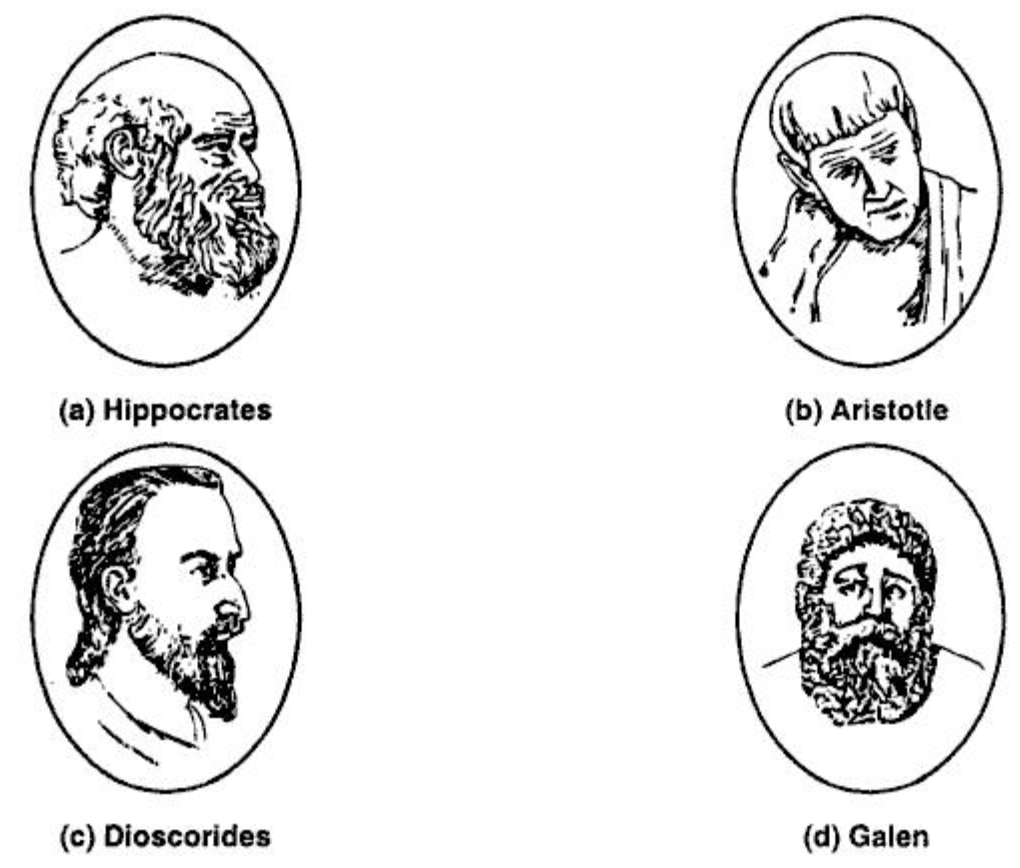
- In Greece around 400 BC, Hippocrates emphasized natural healing. Theophrastus and Dioscorides documented medicinal plants and their uses. Dioscorides’ book De Materia Medica is considered the foundation of Pharmacognosy.
- In Rome between 131 and 200 AD, Galen developed early methods of drug extraction and formulation known as Galenical preparations, earning him the title Father of Pharmacy.
Modern Development of Pharmacognosy:
- Modern Pharmacognosy developed significantly during the 18th and 19th centuries. In 1815, C.A. Seydler coined the term Pharmacognosy in his book Analecta Pharmacognostica.
- Carl Linnaeus introduced the binomial system of plant nomenclature in 1753. William Withering reported the medicinal use of Digitalis in 1785. In 1806, Sertürner isolated morphine from opium, marking the discovery of the first alkaloid.
- Pelletier and Caventou isolated quinine from cinchona bark for the treatment of malaria. Bentham and Hooker developed modern plant classification systems, and Gregor Mendel laid the foundation of plant genetics.
- The period from 1934 to 1960 is known as the Antibiotic Era. During this time, drugs like penicillin, streptomycin, and tetracycline were discovered. Reserpine from Rauwolfia serpentina and vinca alkaloids with anticancer activity were also identified. Chromatographic and spectroscopic techniques were introduced, improving drug isolation and analysis.
Present Status of Pharmacognosy:
Today, Pharmacognosy is an interdisciplinary science connecting botany, chemistry, pharmacology, biotechnology, and medicine. Traditional drugs such as senna, digitalis, and opium are scientifically re-evaluated for safety and efficacy.
Many countries have established Herbal Pharmacopoeias to ensure the quality, purity, and safety of medicinal plants. Advanced analytical techniques and biotechnology have expanded the scope of Pharmacognosy in drug discovery and standardization.
Scope of Pharmacognosy:
Pharmacognosy has a wide scope in pharmaceutical sciences and healthcare.
- Drug discovery and development using natural products as lead compounds
- Quality control and standardization of crude drugs
- Supply of raw materials for pharmaceutical, nutraceutical, and cosmetic industries
- Research and identification of new bioactive compounds
- Integration of traditional medicine systems with modern medicine
Pharmacognosy also has great economic importance. Countries like India, with rich biodiversity, have vast potential for cultivation and export of medicinal plants, contributing to healthcare and the national economy.
Summary:
Pharmacognosy is a vital and ever-evolving branch of pharmacy that bridges traditional knowledge and modern pharmaceutical science. It plays a key role in drug discovery, quality assurance, herbal medicine research, and global healthcare development.
Frequently Asked Questions (FAQs)
1. What is Pharmacognosy?
Pharmacognosy is the study of crude drugs obtained from natural sources such as plants, animals, and minerals.
2. Why is Pharmacognosy important for pharmacy students?
It helps students understand natural medicines, their identification, uses, and role in drug development.
3. Who is known as the Father of Pharmacognosy?
Dioscorides is considered the Father of Pharmacognosy due to his work De Materia Medica.
4. What is the Antibiotic Era in Pharmacognosy?
The period from 1934 to 1960 when antibiotics like penicillin and streptomycin were discovered.
5. What is the scope of Pharmacognosy in modern pharmacy?
It includes drug discovery, quality control, herbal medicine research, and integration of traditional and modern medicine.